
Pediatric Physical Therapy for Babies and Children in NYC & the Hamptons
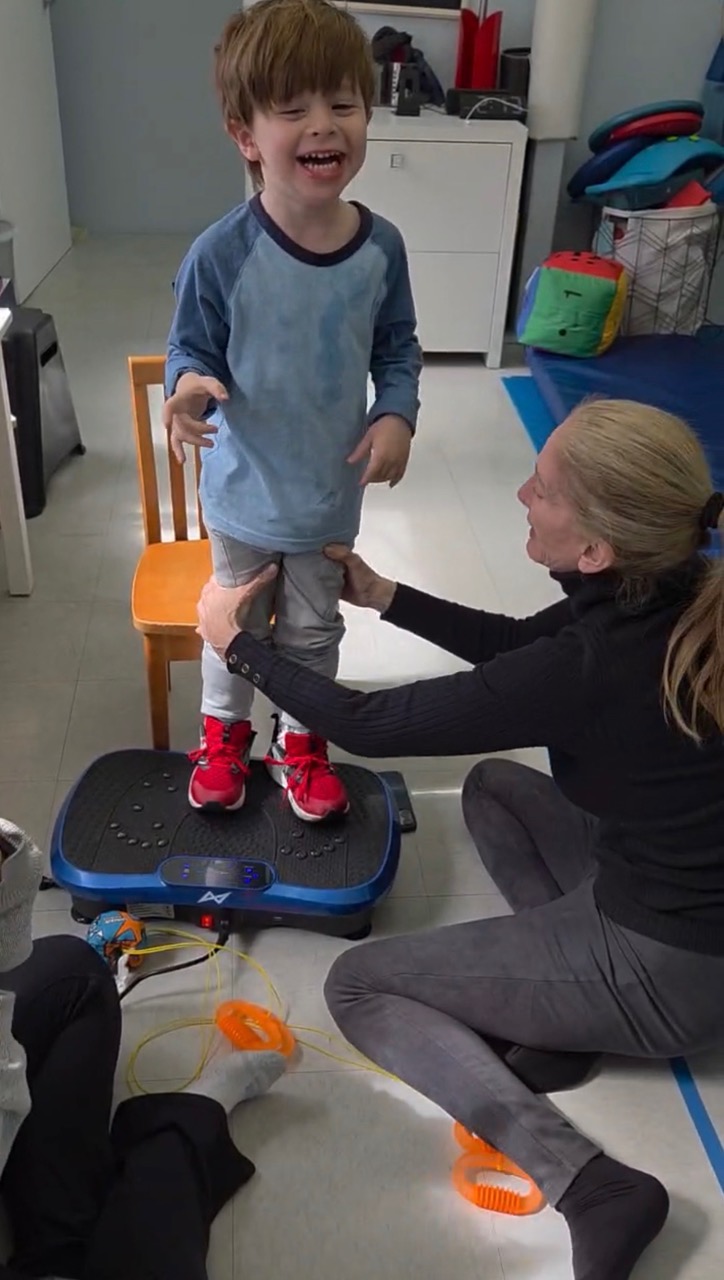
If your baby or child has cerebral palsy, you may already have several specialists and therapists involved in their care. You may also have questions that change as your child grows. What should we be working on now? How much help should I give? Should we focus on sitting, crawling, standing, walking, strength, or equipment? I don't believe there is one physical therapy program for cerebral palsy. Cerebral palsy can affect movement, posture, muscle tone, strength, balance, coordination, and mobility in very different ways. My first priority is to understand your individual child: what they can do, what is difficult, how they are moving, and which skills would make the greatest difference in everyday life.
Cerebral Palsy Affects Children Differently
Cerebral palsy describes a group of permanent disorders affecting movement and posture that result from a non-progressive disturbance in the developing brain. The underlying brain disturbance does not progressively worsen, but your child's movement needs can change considerably with growth and development. One child may walk independently but have difficulty with balance, running, stairs, or endurance. Another may use a walker or gait trainer. A younger baby may be working on head control, reaching, rolling, sitting, or transitions. Muscle tone can also differ. Some children have increased tone or spasticity, while others may have lower or fluctuating tone. Strength, selective motor control, coordination, sensation, joint mobility, and orthopedic alignment can all influence function. That variability is why I begin with your child rather than with a standard treatment plan based on the diagnosis.
Early Motor Development
For babies and younger children with cerebral palsy, early physical therapy often focuses on creating opportunities for active movement. I may work on head and trunk control, reaching, rolling, weight shifting, sitting, transitions, floor mobility, kneeling, standing, and early mobility depending on your child's developmental level. I am interested in what your child initiates independently and how much assistance is truly needed. I want to provide enough support for success without doing the movement for your child. Active movement matters. Your child needs opportunities to practice solving movement problems, not simply to be placed into positions.
Muscle Tone, Strength and Movement
Muscle tone and strength are related, but they are not the same thing. A child with increased muscle tone can still have significant weakness. A child may appear stiff through the legs yet have difficulty generating enough controlled strength through the trunk, hips, or legs for standing and walking. That distinction affects treatment. I don't focus solely on reducing or changing tone. I look at how tone, strength, selective motor control, range of motion, balance, and alignment are affecting what your child can actually do. Treatment should help your child develop more effective movement for everyday function.
Strength Matters in Cerebral Palsy
Strengthening can be an important part of physical therapy for children with cerebral palsy. I may work on trunk and hip strength, lower-extremity strength, postural control, weight bearing, transitions, standing, squatting, stairs, or walking. For younger children, strengthening often happens through play and developmental movement rather than isolated exercises. For an older child, strengthening may become more specific to the activities they want and need to perform. The goal isn't simply stronger muscles. I want increased strength to translate into better function, whether that means sitting more independently, getting up from the floor, walking farther, climbing stairs, or participating more fully in recreation and family activities.
Range of Motion and Orthopedic Concerns
Children with cerebral palsy can develop muscle tightness and changes in joint range over time. Growth can make these issues more noticeable because bones and muscles may not adapt at the same rate. I monitor range of motion together with posture, alignment, strength, weight bearing, gait, and function. Stretching may be appropriate, but I don't want stretching to become the entire treatment program. Maintaining available range is most useful when your child can also develop strength and control within that range. Some children need ongoing orthopedic monitoring for the hips, spine, feet, ankles, or other musculoskeletal concerns. I work within the recommendations of your child's medical and orthopedic team.
Balance and Postural Control
Postural control allows your child to keep the body stable while sitting, reaching, standing, walking, and changing positions. For some children with cerebral palsy, maintaining balance requires considerable effort. Your child may use the arms for extra support, widen the base of support, rely on one side more than the other, or use stiffness to create stability. I look at these strategies carefully.
Sometimes a compensation is useful and helps a child function more independently. Other times it may limit movement options or make a task unnecessarily difficult. My goal isn't to make every movement look typical. I want to help your child develop movement strategies that improve stability, efficiency, independence, and participation.
Walking and Gait
Walking is often an important goal for families, but gait is much more than taking independent steps. I look at how your child accepts weight through each leg, shifts the body forward, clears the feet, controls the knees and hips, maintains balance, and uses the trunk and arms. I also consider endurance. A child may technically be able to walk but use so much energy that longer distances are difficult. Depending on your child's needs, physical therapy may address gait mechanics, strength, balance, endurance, stairs, uneven surfaces, transitions, or the effective use of a walker, gait trainer, orthotics, or another mobility device. The goal is useful mobility, not simply achieving one particular form of walking.
Mobility Does Not Have to Look One Way
Independent mobility can take different forms. For one child, the goal may be independent walking. Another child may walk shorter distances and use a wheelchair for longer community mobility. A younger child may use a gait trainer while continuing to develop strength and motor control. A mobility device doesn't erase the value of walking or active movement. It can give your child greater independence, conserve energy, and increase participation. I look at what combination of movement and mobility gives your child the greatest access to home, school, family, friends, and the community.
Orthotics and Adaptive Equipment
Some children with cerebral palsy benefit from orthotics or adaptive equipment to improve alignment, stability, positioning, mobility, or participation. The right amount of support varies considerably. I want equipment to have a clear purpose. An orthotic may improve foot and ankle alignment during standing or walking. A gait trainer may increase independent mobility. Supportive seating may allow your child to use the arms more effectively for play or school activities. Equipment should support function while still giving your child opportunities to actively use their own strength and movement. When appropriate, I work with your child's orthotist, physician, and other therapists to help determine what support is most useful.
Physical Therapy After Botox, Casting or Surgery
Some children with cerebral palsy receive medical or orthopedic interventions to address muscle tone, range of motion, alignment, or function. Physical therapy can be particularly important around these periods because changes in range or alignment create new movement opportunities that your child may need help learning to use. After an intervention, I follow the precautions and recommendations of your child's physician and medical team. Treatment may focus on restoring or maintaining range, developing strength, practicing weight bearing, improving balance, and helping your child use new movement possibilities during functional activities.
Growth Changes Movement
A movement strategy that worked well when your child was smaller may become less effective after a growth spurt. As height, weight, muscle length, strength, and body proportions change, balance and movement demands change too. You may notice increased tightness, fatigue, changes in gait, difficulty with stairs, or a temporary decline in a skill that had previously been easier. I consider growth when I evaluate changes in movement. Sometimes treatment needs to shift because your child's body has changed, even though the cerebral palsy itself has not progressed.
Participation Matters
Physical therapy should connect to your child's real life. A goal may involve getting on and off the floor at school, keeping up with family during an outing, using the playground, riding an adaptive bicycle, participating in a sport, walking to a friend's house, or becoming more independent with stairs. Those goals matter just as much as what I measure during an examination. I want therapy to help your child do more of what matters to them and to your family.
What a Cerebral Palsy Physical Therapy Evaluation Includes
I begin by learning about your child's medical and developmental history, current therapy, previous interventions, equipment, orthotics, specialists, and your family's priorities. Depending on your child's age and abilities, I may assess muscle tone, strength, range of motion, joint mobility, posture, alignment, balance, coordination, selective motor control, transitions, floor mobility, standing, gait, stairs, endurance, and overall functional mobility. Standardized measures can also be useful when appropriate for tracking function and change over time. But numbers never replace watching your child move. I want to see how your child approaches a task, where assistance is needed, what compensations are useful, and what might be limiting greater independence.
Physical Therapy Changes as Your Child Changes
A baby with cerebral palsy needs a different physical therapy approach from a school-aged child or teenager. Early treatment may focus on developmental movement and opportunities to explore different positions. Later goals may involve walking efficiency, strength, balance, endurance, orthopedic concerns, sports, community mobility, or greater independence. The plan should continue to change as your child grows. I don't believe a child should remain in the same therapy routine simply because it is familiar. Treatment should have a purpose and reflect your child's current abilities and goals.
Working With Your Child’s Team
Children with cerebral palsy may receive care from several professionals, including pediatricians, neurologists, physiatrists, orthopedists, occupational therapists, speech-language pathologists, orthotists, school therapists, and other specialists. Private physical therapy can complement those services. When your child's needs are complex, communication between providers becomes especially valuable. Medical recommendations, orthopedic precautions, equipment, school needs, and therapy goals should work together rather than in isolation.
Supporting Your Child at Home
I don't want home life to become one continuous therapy session. Children need time to play, explore, interact with family, and simply be children. When I recommend home activities, I try to choose a manageable number that connect to what your child is already doing. A couch can become a place to practice standing. Stairs can provide strengthening. Floor play can encourage transitions. A favorite toy can motivate reaching or weight shifting. The best home program is one that fits realistically into family life.
In-Home Cerebral Palsy Physical Therapy in NYC & the Hamptons
Working with your child at home allows me to see how movement fits into everyday life. I can observe how your child moves on the floor, uses furniture, manages stairs, walks through the home, uses equipment, and participates in family routines. For older children, we can also use outdoor spaces, playgrounds, sidewalks, and community environments when appropriate. Through Motor Skills Matter, I provide individualized in-home cerebral palsy physical therapy for babies and children throughout NYC and the Hamptons.
Why Choose Motor Skills Matter?
I am Dr. Tara Liddle, PT, MA, DPT, PCS, a Board-Certified Pediatric Clinical Specialist with more than 30 years of experience working with babies and children. My background includes 19 years in NICU and neonatal developmental follow-up, as well as extensive experience in pediatric rehabilitation and the treatment of children with neurological and developmental conditions. I am NDT certified and have advanced training in pediatric movement and neuromuscular treatment. I am also a contributing author of the chapter “Physical Therapist Management of Cerebral Palsy” in Contemporary and Global Perspectives in Physical Therapy: Incorporating Clinical Practice Guidelines, published by Springer Nature. I am the author of Why Motor Skills Matter: Improve Your Child's Physical Development to Enhance Learning and Self-Esteem. When I work with a child with cerebral palsy, I combine evidence-informed care with careful observation of how that individual child moves. The diagnosis gives me important information, but it doesn't replace getting to know your child.
Frequently Asked Questions About Cerebral Palsy Physical Therapy
- How often should my child with cerebral palsy have physical therapy?
- There isn't one schedule that is appropriate for every child. Frequency may change depending on your child's age, goals, medical needs, growth, recent surgery or other intervention, existing school or Early Intervention services, and how much skilled therapy is needed at a particular time.
- Can physical therapy change muscle tone?
- Physical therapy doesn't eliminate the underlying neurological cause of altered muscle tone. I can address the functional effects of tone by working on strength, range of motion, postural control, balance, positioning, and movement strategies.
- Should my child with cerebral palsy be strengthening?
- Strengthening can be appropriate for many children with cerebral palsy. The program should be individualized to your child's abilities, medical status, movement pattern, and functional goals.
- Will my child walk independently?
- Walking ability varies considerably among children with cerebral palsy and depends on many individual factors. Rather than making assumptions based on the diagnosis alone, I look at your child's current motor abilities, strength, selective motor control, balance, orthopedic status, medical history, and developmental progression. My focus is on developing the movement and mobility skills that can support as much independence and participation as possible.
- Is using a wheelchair giving up on walking?
- No. A wheelchair or other mobility device can provide independence and conserve energy while your child continues working on standing, walking, strength, or other movement skills when appropriate. Mobility doesn't have to come from one method alone.
- Does private physical therapy replace school PT?
- No. School-based physical therapy focuses on helping your child access and participate in the educational environment. Private physical therapy may address broader goals involving mobility, strength, gait, endurance, orthopedic concerns, recreation, and community participation. The two can complement each other.
Helping Your Child Move With Greater Independence
Cerebral palsy is part of your child's medical history, but it doesn't tell me everything about how your child will move, learn, participate, or grow. I want to know what your child can do now, what requires too much effort, what is becoming difficult, and which next skill could make everyday life easier. Sometimes the goal is a major milestone. Sometimes it is improving balance, walking farther, getting up from the floor, using stairs, or becoming more independent with a mobility device. Those functional changes matter. Through Motor Skills Matter, I provide expert in-home cerebral palsy physical therapy for babies and children throughout NYC and the Hamptons.
Contact me to schedule a pediatric physical therapy evaluation.